Compliance is a byproduct of architecture, not a project
Organizations that pass audits comfortably are not working harder at compliance. They built systems where the evidence is a side effect.
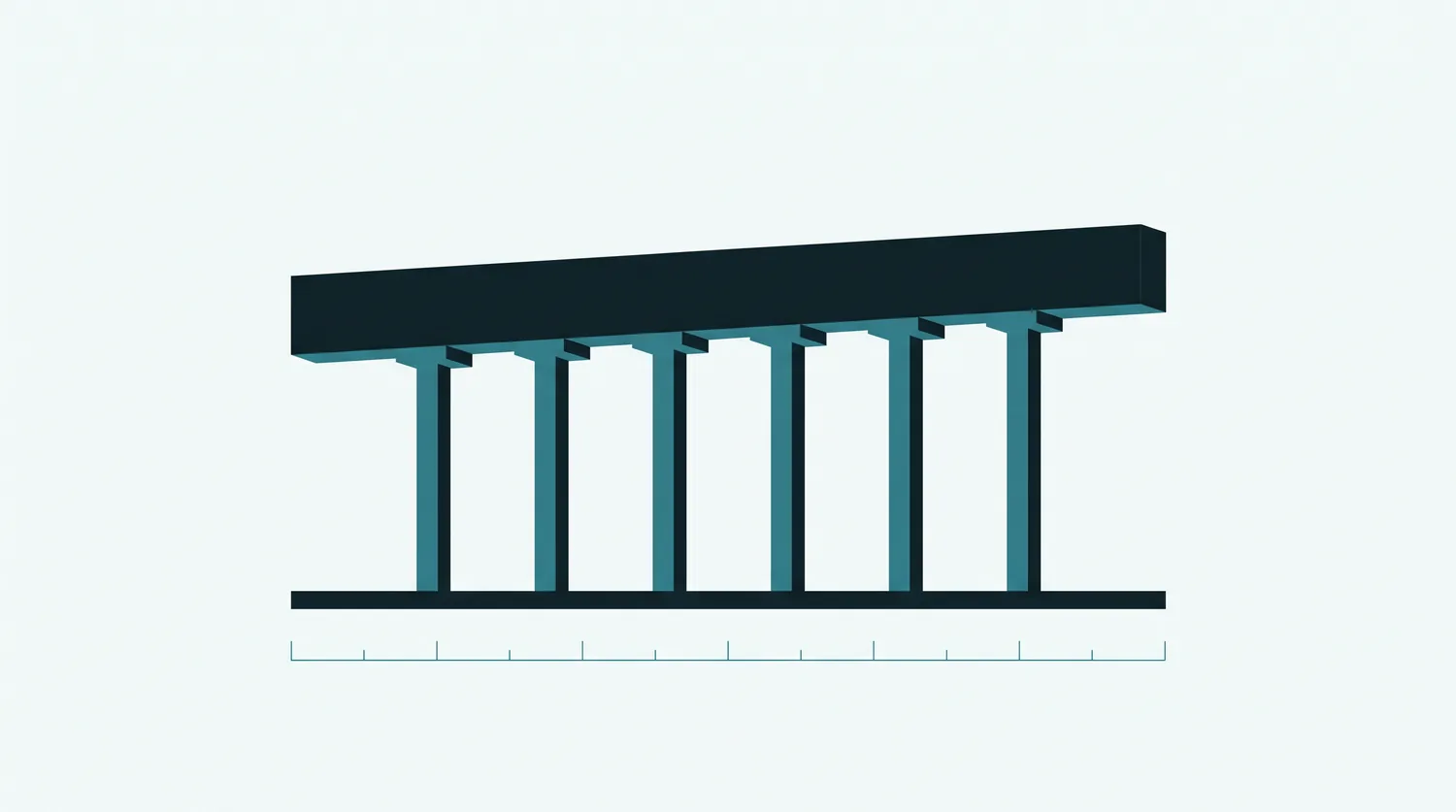
There are two ways organizations get through a GDPR, HIPAA, or GLBA audit, and from the outside they look similar. Both produce the evidence. Both pass. The difference shows up in what it cost and what happens the following year.
The first way is a project. Six to ten weeks before the audit, a team reconstructs evidence: pulling access lists, screenshotting configurations, chasing managers for attestations, writing narrative documents describing controls. It works. It also consumes a meaningful share of senior engineering capacity, and every piece of it must be redone next cycle, because none of it was generated by the system. It was assembled about the system.
The second way is architectural. Access reviews already run quarterly because lifecycle management is automated, and they produce a log. Data is classified at creation because labeling is a container default. Configuration baselines are enforced continuously, and drift is a ticket. When the auditor asks, the answer is an export, not an excavation.
The controls that generate their own evidence
A handful of architectural decisions do most of this work, and they overlap almost entirely with things worth doing for security reasons anyway.
- Automated joiner-mover-leaver. Provisioning driven from the HR system produces a complete, timestamped record of who had access to what and when, which is precisely the artifact an access-control audit asks for.
- Classification at creation. Sensitivity labels applied by default at the container level mean the data inventory is continuously current rather than reconstructed annually, and DLP and retention policies key off it automatically.
- Time-bound privileged access. Every elevation is a request, an approval, and an expiry. That is a complete privileged-access audit trail as a side effect of the control itself.
- Continuous posture assessment. A configuration baseline evaluated continuously gives you both the current state and the historical trend, which answers the "how do you know this was true all year" question that point-in-time screenshots cannot.
- Immutable log retention. Write-once storage for security telemetry satisfies retention requirements and gives incident response a trustworthy record.
If producing your audit evidence requires a project, the control probably is not operating the way the narrative says it is.
Why the project approach is more expensive than it looks
The obvious cost is the recurring effort. The subtler and larger cost is that reconstructed evidence describes a point in time, and controls that are only verified annually drift for the other eleven months.
That drift is not a hypothetical audit risk. It is the same drift that produces incidents: the permissive rule added during troubleshooting, the group membership granted for a project and never revoked, the storage account created outside the standard template. An architecture that generates compliance evidence continuously is, mechanically, an architecture that detects those things continuously.
Where the multi-framework advantage shows up
Organizations subject to more than one regime feel this most sharply. Think of a healthcare provider under HIPAA with European patients under GDPR, or a financial services firm under GLBA with EU customers. Frameworks overlap heavily at the control level even where the language differs completely.
Mapping architectural controls to multiple frameworks once, and generating evidence from the control, means the second and third audits cost a fraction of the first. Running a separate project per framework means paying nearly full price every time.
The practical move
Take the evidence request list from your last audit and sort it into two columns: items you could export today from a running system, and items somebody had to assemble. The second column is your roadmap, ordered by how much effort each item consumed.
Most organizations find that three or four architectural changes would move the majority of that column across, and that all of them were already somewhere on the security backlog, waiting for a business case. This is the business case.